Age 17
A pilot's license, then a crash
He earned his license at seventeen and soon after survived an accident caused by mechanical failure.
Featured Author Spotlight · Vol. 002
One man's journey from the Cold War frontline to running manned spaceflight for the entire planet.
READ MORE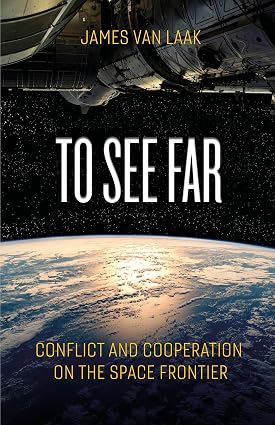

Jim Van Laak grew up in the old industrial city of Schenectady, New York, and was captivated by the Apollo program of the 1960s. He earned his pilot's license at seventeen, survived an accident caused by mechanical failure, then studied at Rensselaer Polytechnic Institute while working for an airplane mechanic. A low draft number led him to Air Force ROTC and to service as a pilot and maintenance officer in the 49th Fighter Interceptor Squadron.
His knowledge of aircraft systems later won him a role at NASA Headquarters, and then at the Johnson Space Center leading maintenance and logistics planning for Space Station Freedom. For the International Space Station he helped integrate the US and Russian programs and created a comprehensive risk management process. He served as deputy director of the Shuttle-Mir program, then managed spaceflight operations during the station's critical start-up phase. He later became a senior manager at NASA's Langley Research Center, served as the FAA's deputy associate administrator for commercial space, and assisted in the launch and activation of the James Webb Space Telescope.
"The Cold War's half-century nuclear standoff left a fighter pilot aching for a vision of a better future with the nation's great strategic rival, Russia."
The Journey
Scroll sideways to follow the trajectory.
To See Far explores a real-world example of cooperation emerging from conflict, and the people, decisions, relationships, and techniques that made it possible.
The Arc
Cold War
Conflict
Competition
Space Station Freedom
Political Change
Russia Enters the Picture
Shuttle–Mir
Crisis
Trust
Integration
Cooperation
The Result
The largest structure ever built in orbit, assembled by nations that once aimed weapons at each other.
The Book
To See Far is the inside story of how the United States and Russia, two antagonists who spent half a century aiming nuclear weapons at each other, came to build and operate the International Space Station together. Jim Van Laak was in the rooms where it happened, first as a fighter pilot on Cold War alert, then as one of the NASA managers responsible for making an impossible partnership actually fly.
It is a story of hardware and human beings: of Shuttle-Mir's near-disasters, of translators and mistrust, of engineering decisions made with lives in the balance, and of the quiet diplomacy that held a fifteen-nation program together when politics on the ground turned hostile. Along the way it delivers hard-won lessons on leadership, risk, and decision-making under extreme pressure.
Above all, it argues something urgent for our own moment: that former enemies can set differences aside, find a common goal worth the effort, and accomplish something no one could achieve alone. We go into space to see far, and what we see is each other.
The Readership
Some people think To See Far is only for "space geeks." Its real audience is much wider: people who want to understand how humanity can cooperate across differences, how leaders make decisions under pressure, how high-risk problems are managed, and what kind of world we leave for the next generation.
For readers fascinated by human spaceflight, aerospace, and exploration.
How former antagonists learned to find common ground.
Lessons from difficult decisions and competing interests.
How high-stakes problems can be understood and managed.
The role technology can and should play in humanity's future.
What the ISS experience reveals about our ability to work together.
IT IS SOMETHING PEOPLE CAN LEARN TO DO.
Jim Van Laak's message is not simply that people should behave better. It is that there are tools, techniques, relationships, and decisions that can make cooperation possible, even when the people involved have very different interests and histories.
Praise
"A captivating chronicle of US-Russian space cooperation. To See Far is a definitive, firsthand account of the challenges, breakthroughs, and extraordinary teamwork that shaped US-Russian space cooperation from 1993 to the present. With rich storytelling and unparalleled insight, this book is an essential read for aerospace professionals, historians, policymakers, teachers, and students alike."
"To See Far recounts the tumultuous early years of the International Space Station, which I covered as CNN's space correspondent. From my vantage point, the ISS partnership seemed fragile, but until I read Jim Van Laak's candid insider's account, I did not realize the extraordinary human and technical struggle to hold the program together. To See Far is an essential and eye-opening account of one of NASA's great projects."
Watch
Hear the story from someone who was there, and discover the people and decisions behind one of the most extraordinary international engineering efforts in history.
Video 01
Video 02
Amazon rating
4.7
out of 5 stars
9 ratings
Format
Available in hardcover and Kindle editions.
Reader Reviews
"Mr. Van Laak makes an amazing roadmap for cooperation and working with countries around the globe to make peace. Our civilization can be improved and progressed by his experiences."
"Van Laak bridges the gap between raw aerospace engineering, risk management, and the high stakes diplomacy required to merge American and Russian space programs after the Cold War."
"The ISS was not just a marvel of technology but a representation of cooperation, patience and understanding. I believe To See Far is the template for how space exploration should proceed."
Author Q&A
The Cold War's nuclear standoff left me aching for a better future with Russia. Two misfortunes of my youth, a low draft number and a dangerous airplane accident, set me on a course to help bring that vision to life. Writing this book was my way of sharing how former rivals learned to work together.
Spaceflight enthusiasts will find familiar topics, but the real value is for people who think about humanity's future, cooperation between different peoples, and technology's role in that future. There are also powerful lessons on leadership, managing high-risk problems, and decision-making under pressure.
We live in a time of tension and conflict. This book shows how two great antagonists learned to put differences aside, find common goals, and work together. This should be the goal of every intelligent person. My ultimate hope is this book helps the ISS receive the Nobel Peace Prize.
Interview
04
It requires understanding the machinery and the people with equal seriousness. For the International Space Station, I helped create a comprehensive risk management process covering both the US and Russian programs, but process alone never carried a decision across the divide. What carried it was the expertise and respect earned during the crises aboard Mir, when there was no time for posturing. Cooperation requires that each side believe the other is competent, honest about danger, and genuinely committed to the same outcome.
05
The Cold War's half-century nuclear standoff left me, a fighter pilot standing alert on the northern frontline, aching for a vision of a better future with our great strategic rival. We found that future in orbit. Two nations that had aimed weapons at each other instead built and flew a station together. In a time of seemingly intractable conflicts, that is not a slogan. It is a documented, difficult, human precedent.
06
That rivals can work together when they share a hard problem and a long view. I became the focus of the conflicts, between American and Russian approaches to spaceflight and between the existing Shuttle program and the emerging station program, and each of those tests could have destroyed the effort. They did not, because enough people on both sides chose the far horizon over the near argument. We go into space to see far. I hope the next generation keeps looking.
Themes
How two nuclear rivals learned to build together, 250 miles up.
Making irreversible decisions when lives ride on every call.
Holding a program together through failure, politics and fear.
Engineering trust across language, culture and old suspicion.
Choosing the horizon over the next quarter, every single time.
A permanent human presence built by fifteen nations at once.
Woven Through
The foundation that made cooperation possible. How two former enemies learned to rely on each other.
Managing the impossible. Decisions made with lives hanging in the balance.
Guiding through crisis. The human element of holding a program together.
Finding common ground. What it actually takes to work across borders.
Under extreme pressure. The moments that defined a generation.
What we build together. Lessons for what comes next.
Reflection
To See Far is more than a record of events.
For Jim Van Laak, it represents the culmination of a lifetime spent working at the intersection of aviation, technology, risk, leadership, and human spaceflight.
He describes the book as the main accomplishment of his life.
A Larger Purpose
The International Space Station can also be understood as a demonstration of what becomes possible when nations with different histories, interests, and systems choose to pursue a common goal.
Jim hopes the story of the ISS can receive recognition not only for what humanity built in orbit, but for what its cooperation represents.
Jim Van Laak's stated goal
Jim's goal is to use the attention generated by the book to help ensure that the International Space Station receives the Nobel Peace Prize.
He notes that the ISS was nominated by President Obama approximately 15 years ago. This is Jim's own perspective and aspiration, not a statement of any current award status.
The story of To See Far asks a simple but important question: what could humanity accomplish if we learned to look beyond our differences and work toward common goals?